Tablet coating is one of the most important pharmaceutical manufacturing processes. It improves the appearance of tablets, protects the active pharmaceutical ingredient (API), masks unpleasant taste and odor, enhances patient compliance, and enables modified drug release.
Modern pharmaceutical industries widely use film coating, enteric coating, and controlled-release coating technologies to improve tablet performance and product stability.
This comprehensive guide explains tablet coating, its types, coating materials, manufacturing process, equipment, quality control, common coating defects, and the latest innovations used in pharmaceutical manufacturing.
What is Tablet Coating?
Tablet coating is the pharmaceutical process of applying a thin layer of coating material onto the surface of compressed tablets to achieve specific functional, aesthetic, or therapeutic objectives.
Definition
Tablet coating is the process of applying a uniform layer of polymer or sugar-based coating material to tablets in order to improve stability, appearance, taste, protection, and drug release characteristics.
Objectives of Tablet Coating
Tablet coating provides several pharmaceutical and commercial advantages.
Major Objectives
- Improve tablet appearance
- Mask unpleasant taste and odor
- Protect drugs from moisture, oxygen, and light
- Improve patient compliance
- Reduce dust formation
- Increase mechanical strength
- Facilitate swallowing
- Enable modified or controlled drug release
- Prevent gastric irritation
- Protect acid-sensitive drugs
- Improve product identification using colors
Types of Tablet Coating
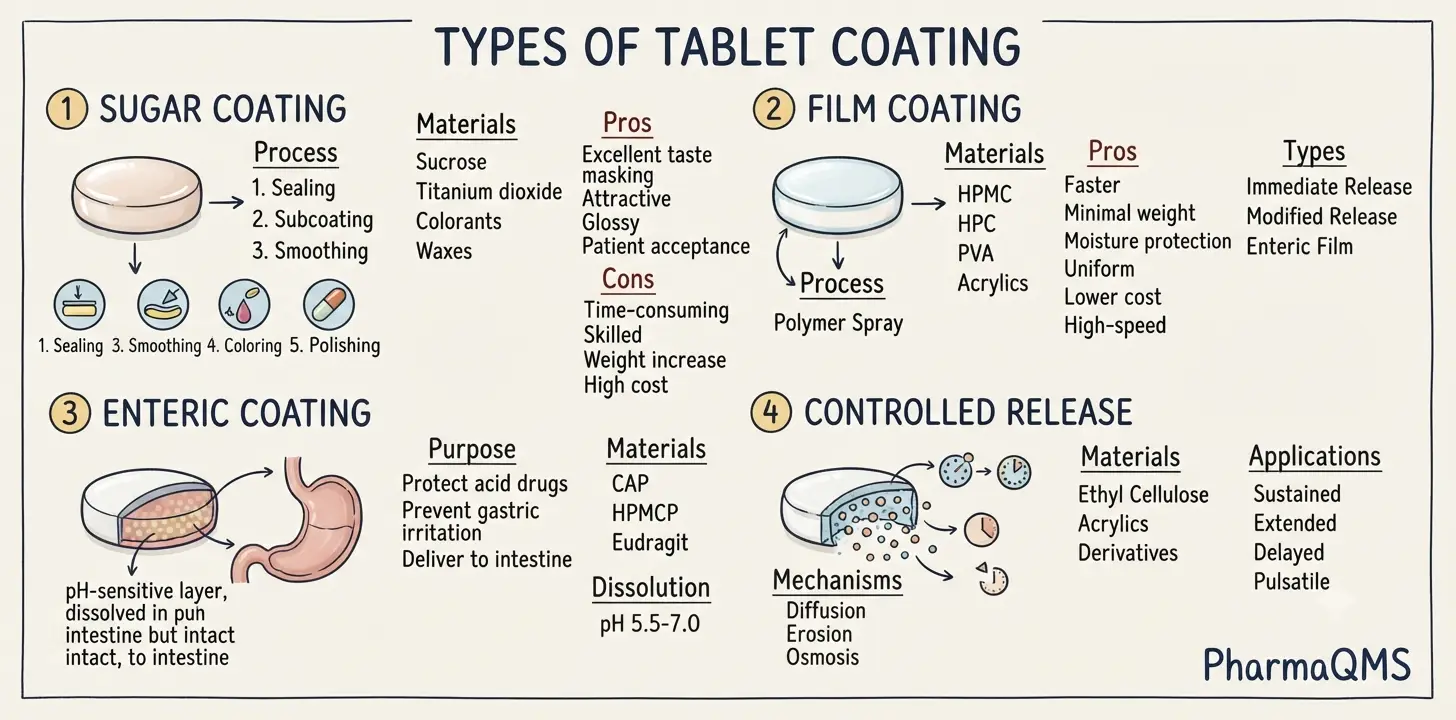
The pharmaceutical industry mainly uses four types of tablet coatings.
1. Sugar Coating
Sugar coating is the traditional method of coating tablets using multiple layers of sugar-based solutions.
Sugar Coating Process
- Sealing
- Subcoating
- Smoothing
- Coloring
- Polishing
Materials Used
- Sucrose
- Titanium dioxide
- Pharmaceutical colorants
- Waxes
Excellent taste masking, attractive appearance, smooth glossy finish, better patient acceptance.
Time-consuming, requires skilled operators, large increase in tablet weight, high production cost.
2. Film Coating
Film coating is the most widely used tablet coating technique in modern pharmaceutical manufacturing. A thin polymer film is sprayed onto rotating tablets using automated coating equipment.
Common Film Coating Polymers
- Hydroxypropyl Methylcellulose (HPMC)
- Hydroxypropyl Cellulose (HPC)
- Polyvinyl Alcohol (PVA)
- Acrylic Polymers
Faster production, minimal weight gain, excellent moisture protection, uniform coating, lower manufacturing cost, suitable for high-speed production.
• Immediate Release Coating
• Modified Release Coating
• Enteric Film Coating
3. Enteric Coating
Enteric coating is a pH-sensitive coating that remains intact in the stomach but dissolves in the intestine.
Purpose
- Protect acid-sensitive drugs
- Prevent gastric irritation
- Deliver drugs directly to the intestine
Common Enteric Coating Materials
- Cellulose Acetate Phthalate (CAP)
- Hydroxypropyl Methylcellulose Phthalate (HPMCP)
- Eudragit Polymers
Dissolution pH: Generally dissolves at pH 5.5–7.0.
4. Controlled Release Coating
Controlled release coatings are designed to release drugs slowly over an extended period.
Drug Release Mechanisms
- Diffusion
- Polymer erosion
- Osmosis
Common Materials
- Ethyl Cellulose
- Acrylic Polymers
- Cellulose Derivatives
Applications
- Sustained Release Tablets
- Extended Release Tablets
- Delayed Release Tablets
- Pulsatile Drug Delivery
Tablet Coating Materials
Choosing the appropriate coating material is essential for product quality and therapeutic performance.
Common Polymer Systems
| Polymer | Type | Properties | Applications |
|---|---|---|---|
| HPMC | Cellulose Ether | Water-soluble | Immediate-release coating |
| Ethyl Cellulose | Cellulose Ether | Water-insoluble | Sustained-release coating |
| Eudragit | Acrylic Polymer | pH-sensitive | Enteric coating |
| PVA | Synthetic Polymer | Strong oxygen barrier | Film coating |
Plasticizers Used in Tablet Coating
Plasticizers improve coating flexibility and reduce cracking.
- Polyethylene Glycol (PEG)
- Triethyl Citrate
- Dibutyl Sebacate
- Glycerin
Colorants and Opacifiers
Improve tablet appearance and provide light protection.
- Titanium Dioxide
- Iron Oxides
- FD&C Dyes
- D&C Dyes
- Aluminum Lakes
Solvent Systems
Tablet coatings can be prepared using different solvent systems.
- Aqueous Systems: Water-based, environmentally friendly, safe for operators, most widely used today.
- Organic Solvent Systems: Ethanol, Acetone, Methylene Chloride (limited use).
- Aqueous Dispersions: Latex systems, pseudolatex systems.
Tablet Coating Equipment
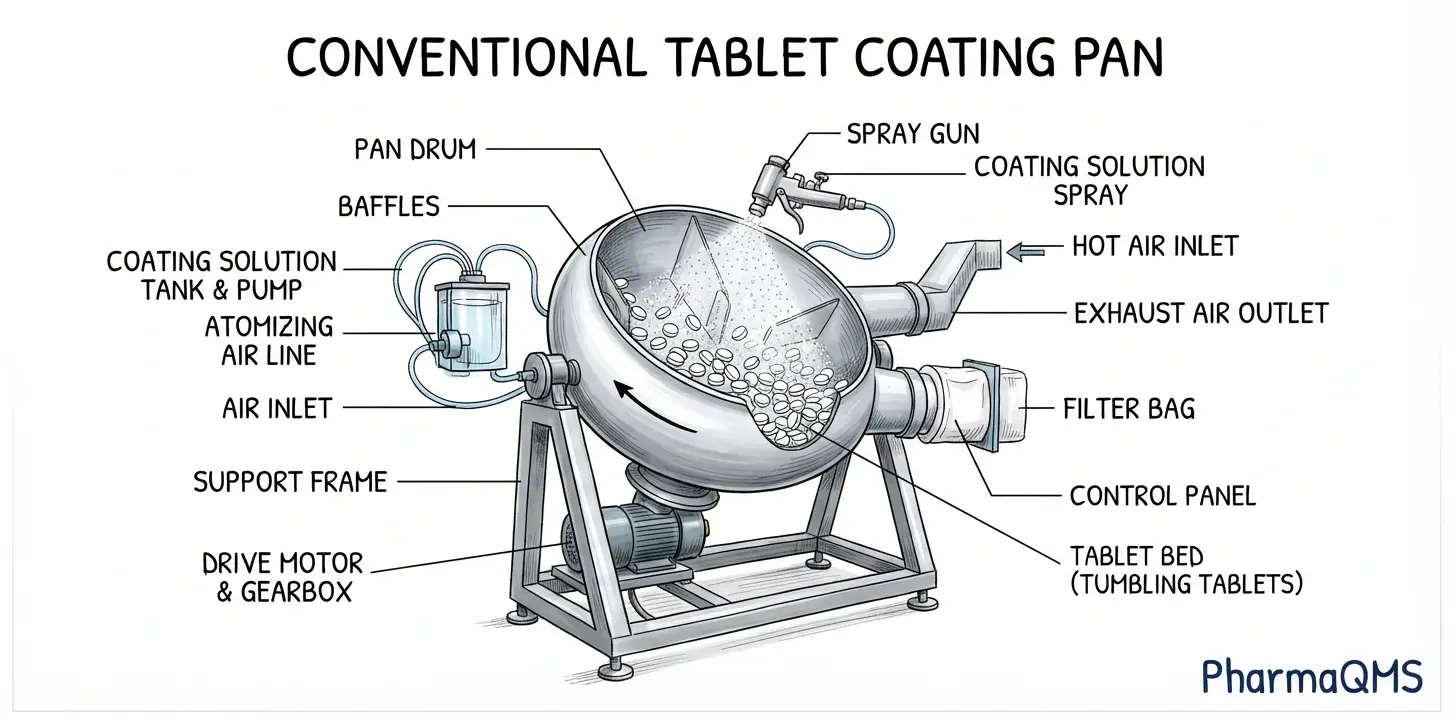
1. Conventional Coating Pan
Traditional rotating pan system.
- Rotating drum
- Spray application
- Hot air drying
- Applications: sugar coating, film coating
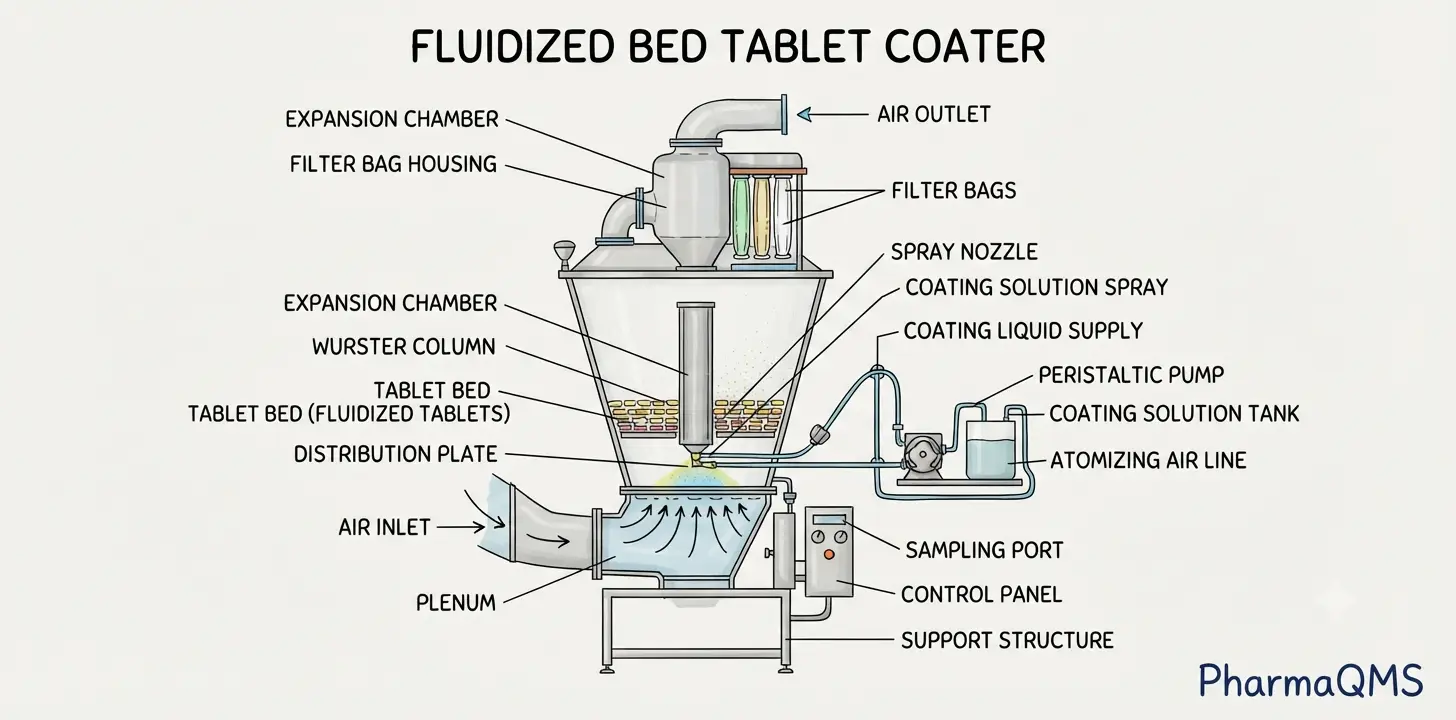
2. Fluidized Bed Coater
Modern pharmaceutical coating equipment.
- Top Spray
- Bottom Spray (Wurster)
- Tangential Spray
Advantages: Uniform coating, faster drying, high efficiency, excellent process control.
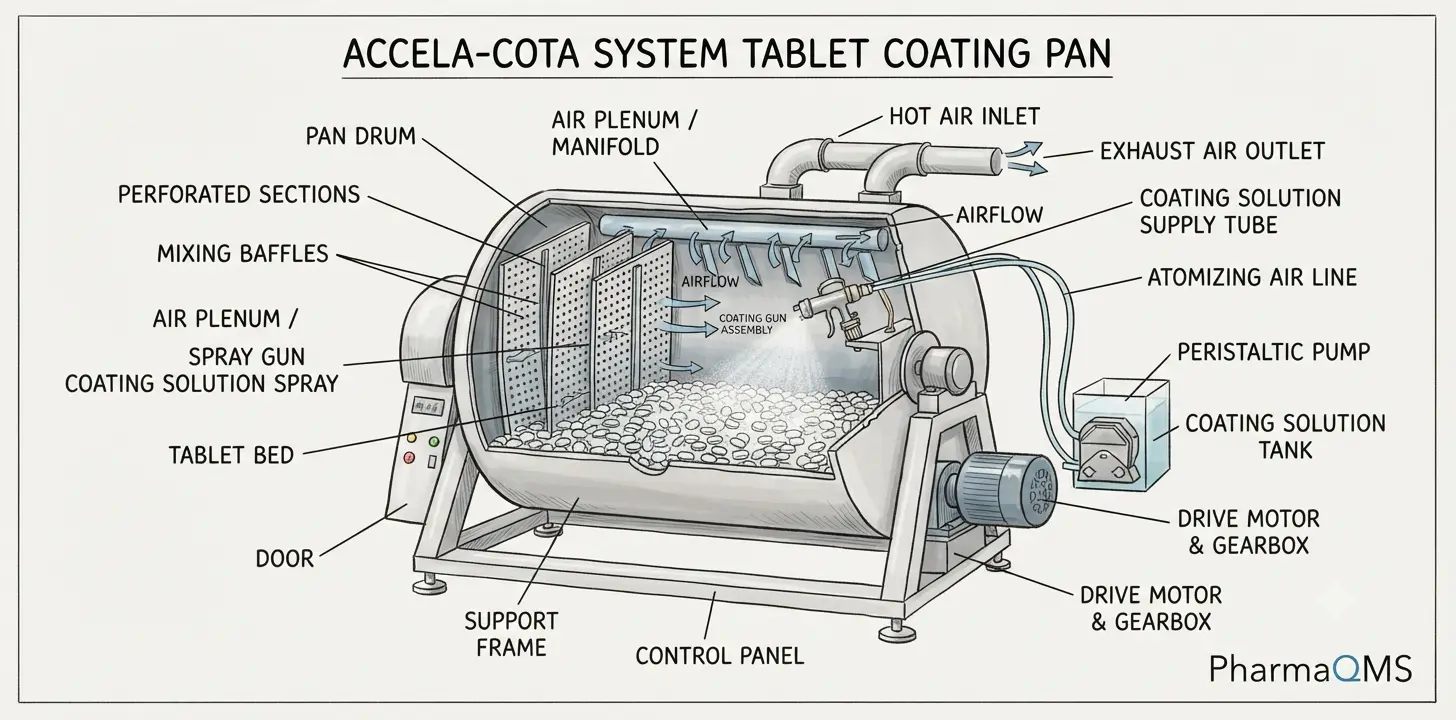
3. Accela-Cota System
A perforated coating pan with improved airflow.
- Faster drying
- Reduced coating time
- Suitable for aqueous film coating
Critical Tablet Coating Process Parameters
Several process variables influence coating quality.
| Parameter | Function | Typical Range |
|---|---|---|
| Spray Rate | Controls coating uniformity | 10–50 mL/min |
| Inlet Air Temperature | Controls drying | 40–70°C |
| Product Temperature | Film formation | 30–45°C |
| Pan Speed | Tablet movement | 5–20 rpm |
| Atomization Pressure | Droplet size | 1–3 bar |
Quality Control of Coated Tablets
Quality control ensures consistent coating performance and regulatory compliance.
Physical Evaluation
- Appearance
- Color Uniformity
- Gloss
- Weight Gain
- Film Thickness
- Hardness
- Film Integrity
Performance Evaluation
- Disintegration Test
- Dissolution Test
- Stability Testing
- Taste Masking Evaluation
- Moisture Protection
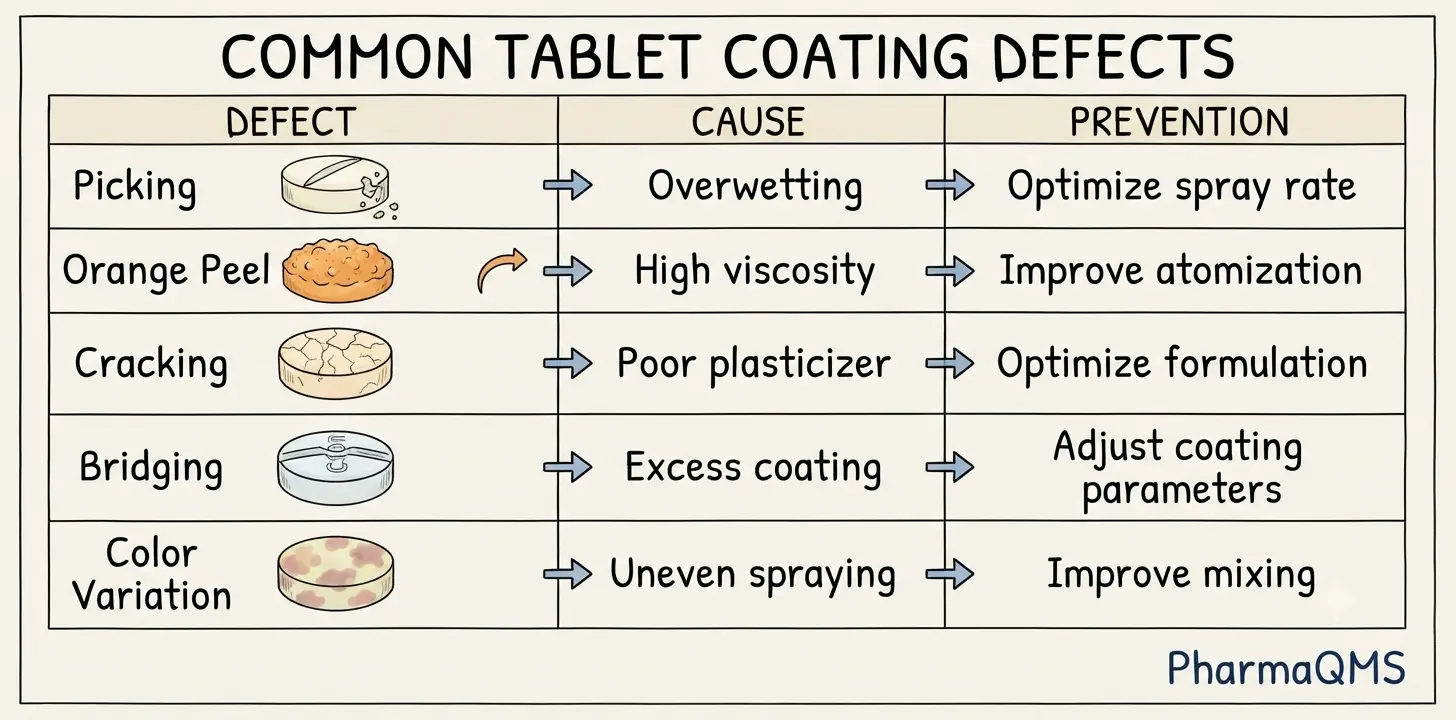
Common Tablet Coating Defects
| Defect | Cause | Prevention |
|---|---|---|
| Picking | Overwetting | Optimize spray rate |
| Orange Peel | High viscosity | Improve atomization |
| Cracking | Poor plasticizer | Optimize formulation |
| Bridging | Excess coating | Adjust coating parameters |
| Color Variation | Uneven spraying | Improve mixing |
Regulatory Requirements
Tablet coating materials must comply with international pharmaceutical regulations. Manufacturers should follow:
- FDA Guidelines
- EMA Guidelines
- ICH Guidelines
- GMP Requirements
Only approved pharmaceutical colorants and excipients should be used.
Recent Advances in Tablet Coating Technology
Aqueous Film Coating
- Replaces organic solvents
- Eco-friendly
- Safer manufacturing
- Lower environmental impact
Hot Melt Coating
- Solvent-free
- Suitable for moisture-sensitive drugs
- Faster processing
Supercritical Fluid Coating
Uses supercritical carbon dioxide (CO₂) instead of traditional solvents. Benefits: Green technology, precise coating, minimal solvent residue.
Electrostatic Coating
An emerging technology that improves coating efficiency by using electrostatic attraction. Potential advantages: reduced material loss, better coating uniformity, improved process efficiency.
Future Trends in Tablet Coating
- Smart responsive coatings
- Personalized medicine coatings
- AI-assisted coating optimization
- Continuous manufacturing
- Biodegradable coating materials
- Sustainable green coating technologies
Conclusion
Tablet coating is an essential pharmaceutical manufacturing process that improves tablet stability, patient acceptability, product appearance, and therapeutic performance. Modern film coating has largely replaced traditional sugar coating because of its speed, efficiency, and cost-effectiveness. Specialized coatings such as enteric and controlled-release coatings enable targeted drug delivery and improved treatment outcomes.
Successful tablet coating depends on selecting the right coating materials, optimizing process parameters, using appropriate equipment, and implementing strict quality control throughout manufacturing.
Frequently Asked Questions (FAQs)
Tablet coating is the process of applying a thin protective layer to tablets to improve stability, appearance, taste masking, and drug release.
The four major types are: Sugar Coating, Film Coating, Enteric Coating, and Controlled Release Coating.
Film coating is faster, more economical, provides better moisture protection, and causes minimal tablet weight gain.
Enteric coating is a pH-sensitive coating that prevents drug release in the stomach and allows dissolution in the intestine.
Common defects include picking, orange peel, cracking, bridging, and color variation.