DOCUMENT CONTROL
SOPs/STPs, BMR/BPR, Specifications, Change History Management. Foundation of GMP compliance.
2
VENDOR QUALIFICATION
Vendor Evaluation, Audit & Approval, Material Approval Status. Ensures supply chain quality.
3
RAW MATERIAL CONTROL
Review COA, Sampling Authorization, Release/Reject Decision. First point of quality gatekeeping.
4
IN-PROCESS QA
Line Clearance, Process Monitoring, In-Process Checks. Real-time quality oversight during manufacturing.
5
DEVIATION MANAGEMENT
Deviation Identification, Root Cause Analysis, Impact Assessment. Handling unexpected events.
6
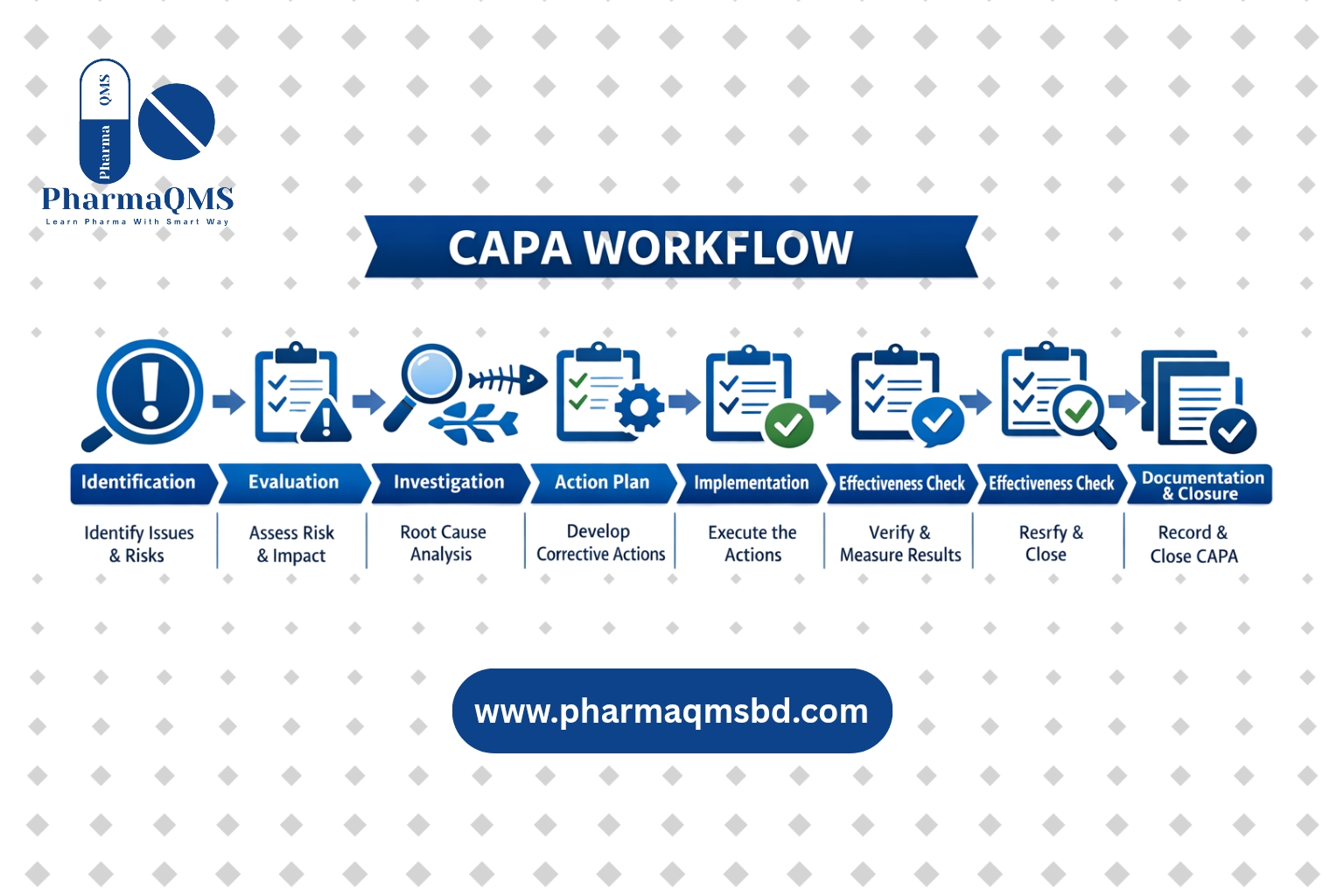
CAPA
Corrective & Preventive Actions, Effectiveness Check. Systematic problem-solving and prevention.
7
CHANGE CONTROL
Change Proposal, Risk Assessment, Approval & Implementation. Managed evolution of systems.
8
VALIDATION & QUALIFICATION
Process Validation, Cleaning Validation, Equipment Qualification. Proving systems work consistently.
9
AUDIT & COMPLIANCE
Internal Audit, Regulatory Audit, GMP Compliance. Verification and adherence to standards.
10
FINISHED PRODUCT RELEASE
QA Release, Market Distribution. Final quality authorization before product reaches patient.
Key Points for Job Preparation
- Documentation is Evidence: Every QA activity must be documented (ALCOA+ principles).
- Traceability: Change History and Approval Status are critical for audit trails.
- Risk-Based Approach: Change Control & Deviation Management rely on risk assessment.
- Proactive vs Reactive: CAPA includes both corrective (fix now) and preventive (stop future).
- Validation = Proof: Equipment and processes must be validated before use.
- Continuous Oversight: QA is involved from vendor to final product release.
- Regulatory Focus: GMP, FDA, EMA, ICH guidelines govern all workflows.