All Posts
0 posts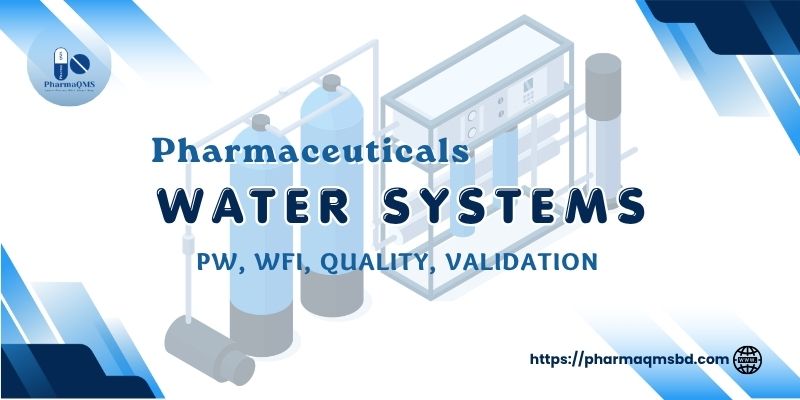
Pharmaceutical Water Systems: WPU, Purified Water, WFI, GMP and Validation
Control of water quality is critical across production, storage, and distribution. Water is drawn on demand and is not batch‑released before use – microbiological tests lag behind usage. Hence, microbial control is a high priority.
Engineering
Pharmaceutical Deviation Management: GMP Deviation Investigation, RCA and CAPA
Pharmaceutical deviation is an unplanned departure from an approved procedure, SOP, specification, protocol, batch record, method, instruction, or other established requirement.
Quality Assurance

Pharmaceutical GMP Training: Complete Training Procedure for Pharmaceutical Industry
Pharmaceutical GMP training is a structured training system designed to ensure that employees understand and correctly perform activities that may affect the quality, safety and efficacy of pharmaceutical products.
Quality Assurance
Tablet Coating in Pharmaceutics: Types, Process, Formulation and Common Defects (Complete Guide)
Modern pharmaceutical industries widely use film coating, enteric coating, and controlled-release coating technologies to improve tablet performance and product stability.
Technology
Liquid Dosage Forms in Pharmaceutics: Advantages and Classification
Pharmaceutical Liquid dosage forms represent a diverse category of pharmaceutical preparations that include solutions, syrups, elixirs, spirits, tinctures, and fluid extracts. These formulations offer advantages such as ease of administration, rapid absorption, flexibility in dosing, and suitability for patients who have difficulty swallowing solid dosage forms.
Technology
Pharmaceutical Regulatory Affairs: The Backbone of Pharmaceutical Compliance
Regulatory professionals are responsible for preparing scientific documentation, obtaining marketing authorization, maintaining regulatory compliance throughout the product lifecycle, and communicating with health authorities worldwide.
Regulatory Affairs
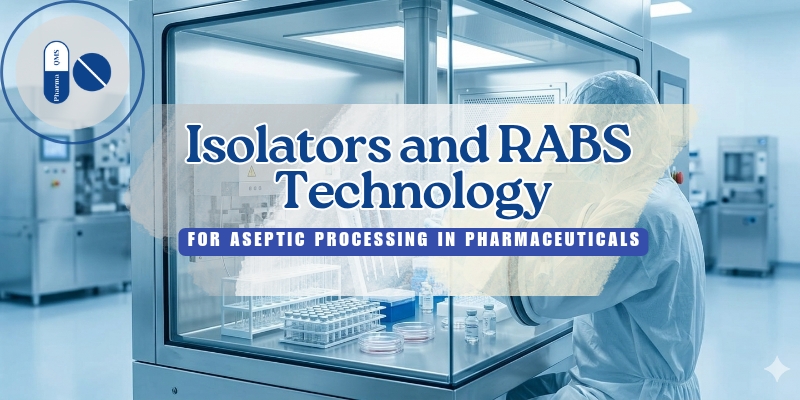
Isolators and RABS Technology for Aseptic Processing in Pharmaceuticals
Barrier technologies, including isolators and Restricted Access Barrier Systems (RABS), represent significant advancements in aseptic processing. These systems create physical barriers between the operator and the critical processing environment, dramatically reducing the risk of microbial contamination from personnel - historically the greatest contamination risk in aseptic processing.
Engineering
The Essentials of Tablet Design: Ensuring Quality and Efficacy in Pharmaceutical Formulations
Pre-formulation Studies: Practical use of pre-formulation data including solid-state properties, solubility analysis, dissolution, stability analysis, and permeability studies.
Technology
Validation Master Plan (VMP) in Pharmaceutical Manufacturing
Validation Master Plan (VMP): A high-level document that summarizes the company's overall validation philosophy, responsibilities, scope, timelines, and activities. It acts as the guiding framework for all qualification and validation efforts, ensuring that manufacturing processes, equipment, facilities, and systems remain in a validated state of control.
Quality Assurance
Nonverbal Communication for Pharmacy Communication Skills
Nonverbal communication involves the complete mix of behaviors, psychological responses, and environmental interactions through which we consciously or unconsciously relate to others. Unlike verbal communication, the medium is neither vocalized language nor written words, making it more subtle yet often more powerful.
Hospital and Community Pharmacy
Principles and Elements of Interpersonal Communication in Pharmacy Practice
Interpersonal communication is a common but complex practice essential for effective pharmacy practice. While we engage in countless interactions daily, successful communication requires understanding the underlying process that occurs when one person tries to express ideas or exchange information with another.
Hospital and Community Pharmacy
Patient-Centered Communication in Pharmacy Practice - by Pharma QMS
The evolution of pharmacy practice has shifted from a product-oriented, medication-dispensing model to a patient-centered care model where communication is the cornerstone of therapeutic success. This transition reflects the growing recognition that medication-related problems often stem from communication failures rather than pharmacological deficiencies
Hospital and Community Pharmacy
Statistical Applications in the Pharmaceutical Sciences
Statistics is an essential tool in pharmaceutical research, development, and quality control. This topics covers fundamental statistical concepts and their practical applications in areas such as experimental design, data analysis, quality assurance, stability testing, and regulatory submissions.
Technology
Quality Risk Management (QRM) in Pharmaceuticals : A Comleate Guide
Quality Risk Management is a systematic process for the assessment, control, communication, and review of risks to the quality of pharmaceutical products across their lifecycle. It is a proactive approach that enables science-based and practical decisions regarding product quality.
Quality Assurance
Quality Audits in Pharmaceutical
In FDA & ISO environments, auditing of both compliance and performance is essential. Pharmaceutical audit experience includes the drafting and revision of validation policies, guidelines and SOP from project qualification to performance evaluation phases. If implemented correctly, it can be one of the most effective means of improvement.
Quality Assurance
Pharmaceuticals Document and Data Management System - ALCOA and ALCOA+
Document Management System (DMS) is essential for maintaining regulatory compliance, ensuring data integrity, and supporting efficient operations in pharmaceutical manufacturing. It encompasses the creation, review, approval, distribution, maintenance, archiving, and destruction of all GMP documents.
Quality Assurance
Prevention and Control of Cardiovascular Diseases
Cardiovascular disease prevention operates on a continuum from population-level interventions to individual patient management. Pharmacists play crucial roles across all prevention levels, aligning with Sustainable Development Goal 3.4 to reduce premature NCD mortality by one-third by 2030.
Clinical Pharmacy
Current and Future Roles in Patient-Centered Cardiovascular Care
The management of cardiovascular diseases requires a paradigm shift from disease-focused to patient-centered care. This approach recognizes patients as active participants in their healthcare journey, with unique values, preferences, and needs.
Clinical Pharmacy
Pharmaceuticals Water System (WFI and WTP) - Short Note
Water is a vital resource in industrial settings, especially in sectors like pharmaceuticals, food & beverage, and power generation. Two key systems are used to ensure water quality and environmental compliance: the Water Treatment Plant (WTP) and the Effluent Treatment Plant (ETP). While WTPs purify raw water for use, ETPs treat wastewater before its disposal or reuse.
Engineering
Screening and Identification of Clinical Manifestations of CVDs
Accurate blood pressure measurement is fundamental to hypertension diagnosis and management. Pharmacists must master both office and out-of-office measurement techniques.
Clinical Pharmacy
Supporting People with Cardiovascular Diseases Through Team-Based Care
Cardiovascular disease management requires moving beyond the traditional "silo mentality" to integrated, team-based care. The complexity of CVD, with its multiple risk factors, comorbidities, and long-term management needs, demands coordinated efforts across healthcare professions.
Clinical Pharmacy
Pharmaceutical Care: Basic Concepts & Communication Skills
The pharmacist should also be skilled to plan, direct and implement pharmaceutical care activities within various practice environments, such as community pharmacy, ambulatory care settings, managed or contractual care, home health services, long-term care facilities, inpatient hospital practice, and others. Allocating resources in the pharmacy is also a direct responsibility of the pharmacist.
Clinical Pharmacy
Community Pharmacy Practice - Study Note
In the community pharmacy practice, the legality, safety and appropriateness of the prescription order is verified and the patient medication record is checked before dispensing the prescription. This helps to ensure that the quantities of medication dispensed are accurate, and decide whether the medication should be handed to the patient.
Hospital and Community Pharmacy
Pharmacological Treatment Strategies for Cardiovascular Conditions
Hypertension management follows evidence-based guidelines with specific recommendations for drug selection, combination therapy, and monitoring.
Clinical Pharmacy