All Posts
0 posts
Pharmaceuticals CAPA Management Overview
Corrective Action: Reacting to existing problems, complaints, or nonconformities and fixing them.
Preventive Action: Detecting potential problems/nonconformities and eliminating them before they occur.
Quality Assurance
HPLC Basics - Comprehensive Study Note
HPLC is an abbreviation for High Performance Liquid Chromatography (previously referred to as High Pressure LC).
Key difference from LC: In principle, LC and HPLC work the same way except the speed, efficiency, sensitivity and ease of operation of HPLC is vastly superior.
Quality Control
HPLC Interview Question and Answer for Pharmaceutical Job Preparation
HPLC (High Performance Liquid Chromatography) is an analytical technique used to separate, identify, and quantify components in a mixture. In pharmaceutical QC, it's preferred because:
High sensitivity and accuracy for active pharmaceutical ingredients (APIs)
Ability to analyze thermally unstable compounds
Job Preparation
Pharmaceuticals Cleaning Validation
Cleaning validation is documented evidence that an approved cleaning procedure will reproducibly remove the previous product or cleaning agents used in the equipment below the scientifically set maximum allowable carryover level.
Cleaning Validation is not monolithic; it requires a comprehensive, science-based approach throughout the product lifecycle.
Quality Control
Isolators and RABS Technology for Pharmaceuticals Aseptic Processing
Restricted Access Barrier Systems (RABS) are intermediate technology between traditional cleanrooms and full isolators. RABS provide a physical barrier but typically allow more operator access than isolators while maintaining higher protection than open cleanrooms.
Production
Pharmaceuticals Sterile Dosage Forms and Aseptic Processing
Sterile products can be manufactured by two primary methods: 1) Terminal sterilization (product sterilized in final container) and 2) Aseptic processing (components sterilized separately then assembled under aseptic conditions). Aseptic processing carries higher risk and requires more stringent controls.
Production
Pharmaceuticals Solid Dosage Manufacturing Facility Design
Solid dosage forms, primarily tablets and capsules, represent the largest category of pharmaceutical products by volume. The design of facilities for manufacturing these products must balance efficiency, flexibility, contamination control, and regulatory compliance. Solid dosage manufacturing typically involves multiple unit operations that transform raw materials into finished dosage forms through various processing steps.
Production
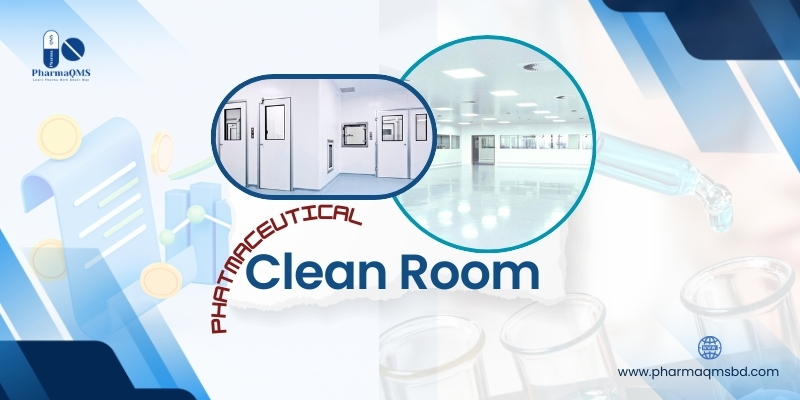
Pharmaceuticals Cleanroom Features and Construction Materials
All cleanroom surfaces must be non-porous, non-shedding, easily cleanable, and resistant to the cleaning agents and disinfectants used. Joints and seams must be sealed to prevent particle accumulation and microbial growth.
Cleanroom Construction Approaches
Engineering
GMP Requirements for Pharmaceutical Facility Design
Pharmaceutical facilities must be designed, constructed, and maintained to ensure that products are consistently manufactured to the required quality standards, minimizing risks of contamination, cross-contamination, and errors that cannot be eliminated through testing of final products.
Engineering
PIC/S Classification System for Pharmaceutical Sterile Products
The Pharmaceutical Inspection Convention and Pharmaceutical Inspection Co-operation Scheme (PIC/S) is an international organization between pharmaceutical inspection authorities that aims to harmonize Good Manufacturing Practice (GMP) standards and promote mutual recognition of inspections. PIC/S develops and maintains the "Guide to Good Manufacturing Practice for Medicinal Products," with Annex 1 specifically addressing the manufacture of sterile medicinal products.
Production
ISO Cleanroom Classification System in Pharmaceuticals
According to ISO 14644-1, a cleanroom is "a room in which the concentration of airborne particles is controlled, and which is constructed and used in a manner to minimize the introduction, generation, and retention of particles inside the room, and in which other relevant parameters (e.g., temperature, humidity, pressure) are controlled as necessary."
Production
Cleanroom Classification and Design - Details
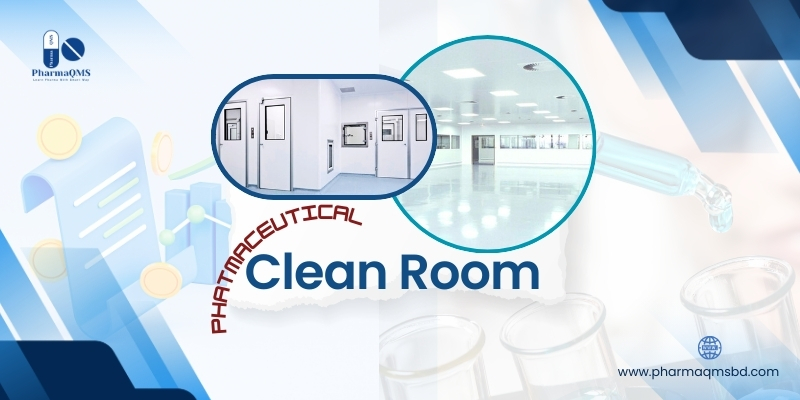
Cleanrooms are specially designed and maintained environments where the concentration of airborne particles is controlled to specified limits. They are essential in industries where microscopic contamination can adversely affect product quality, including pharmaceuticals, biotechnology, medical devices, semiconductors, and healthcare.
Production
Current Good Manufacturing Practices (cGMP)
Current Good Manufacturing Practices (cGMP) are regulations enforced by the US Food and Drug Administration (FDA) that provide systems to ensure proper design, monitoring, and control of manufacturing processes and facilities. Adherence to cGMP regulations assures the identity, strength, quality, and purity of drug products by requiring that manufacturers adequately control manufacturing operations.
Guideline
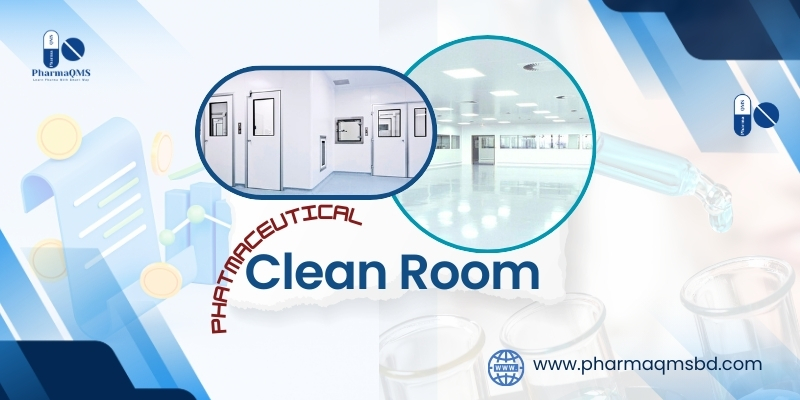
Cleanrooms and GMP Design of Pharmaceutical Facilities
Cleanrooms provide controlled environments where airborne particulate contamination is limited to levels appropriate for contamination-sensitive activities.
Cleanroom Definition
A cleanroom can be defined through two perspectives:
Production
SOP for Good Documentation Practice
1. Purpose:
To define the common practice to be followed for data entry in all GMP / GLP records.
2. Scope:
This procedure is applicable to all GMP / GLP records filled manually at Pharmaceutical Limited. This SOP is a general guideline and will be superseded whenever any specific requirements are mentioned in other SOP or approved documents.
SOP
Purified Water Test Procedure in Pharmaceuticals
01. METHOD OF ANALYSIS
i) Appearance
Clear, odorless and colorless liquid.
ii) pH
Transfer 100ml water to a suitable container; add 0.3ml of saturated potassium chloride solution and stirring water, then measure the pH using calibrated pH meter.
Quality Control
Pharmaceutical Document Control - Short Note
Pharmaceuticals Document Control Workflow
1 DOCUMENT CONTROL
SOPs/STPs, BMR/BPR, Specifications, Change History Management. Foundation of GMP compliance.
Quality Assurance
ALCOA & ALCOA+ Interview Questions & Answers
Basic Data Integrity
Q1. What is Data Integrity?
Data Integrity means data is complete, consistent, accurate, and trustworthy throughout its lifecycle.
Q2. Why is Data Integrity important in pharmaceuticals?
Because decisions related to product quality, safety, and efficacy depend entirely on reliable data.
Job Preparation
Data Integrity (ALCOA & ALCOA+)
Data Integrity (ALCOA & ALCOA+)
Data Integrity means: Data must be trustworthy, reliable, and accurate throughout its entire lifecycle
Job Preparation
Introduction to Pharmaceutics - Study Notes
Pharmaceutics is the discipline of pharmacy that deals with the process of turning a new chemical entity (NCE) or pure drug into a medication that can be used safely and effectively by patients. It is also called the science of dosage form design.
Bio-Pharmaceutics
Introduction of Clinical Pharmacy - Study Notes
Clinical pharmacy comprises functions that promote the safe, effective, and economic use of medicines for individual patients. It shifts the focus from product-oriented roles to direct patient engagement.
Clinical Pharmacy
Prescribing - Clinical Pharmacy Study Notes
Prescribing involves assessing benefits vs. harms of treatment
Medication should be cost-effective, appropriate, and dosed correctly
Patient autonomy, consent, and shared decision-making are fundamental
Consultation requires interpersonal, reasoning, and practical skills
Prescribing is influenced by evidence, external factors, and cognitive biases
Clinical Pharmacy
_20260225_235322_0000.jpg)
Clinical Pharmacy Process - B.Pharm Study Notes
Clinical pharmacy promotes the safe, effective, and economic use of medicines for individual patients.
Shift from product-oriented roles to direct patient engagement.
The three key elements of the care process: patient assessment, care plan determination,
Clinical Pharmacy
Interview Questions & Answers - Pharmaceutical Quality Control
What is the function of UV spectrophotometer?
UV/Vis spectroscopy is routinely used in analytical chemistry for the quantitative determination of different analytes, such as transition metal ions, highly conjugated organic compounds, and biological macromolecules.
Job Preparation